
PM Surya Ghar 2.0: What’s Changing?
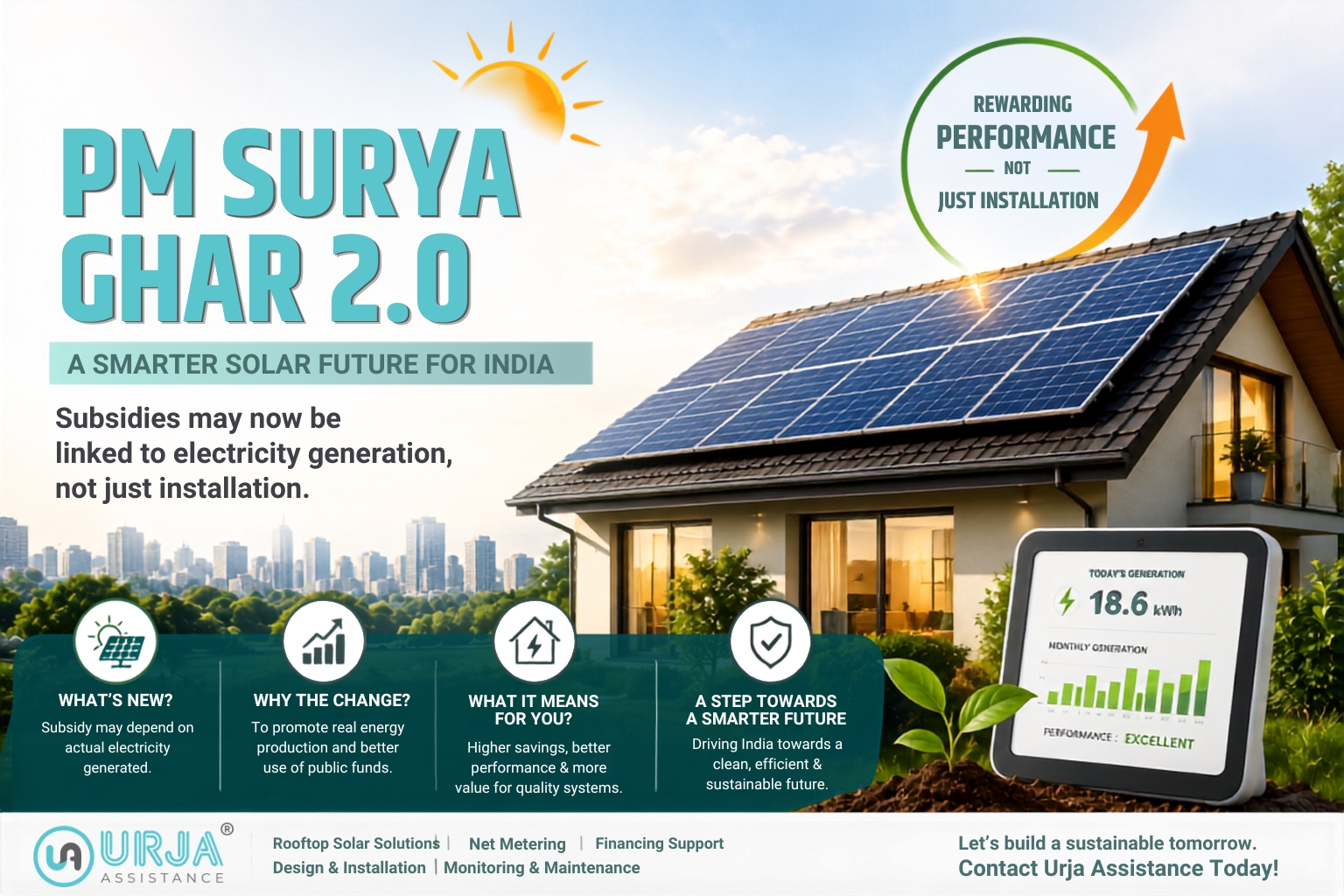
India’s flagship rooftop solar initiative, PM Surya Ghar: Muft Bijli Yojana, has accelerated residential solar adoption by providing subsidies based on installed system capacity. Now, the government is reportedly working on PM Surya Ghar 2.0, a redesigned framework that aims to make the scheme more efficient, transparent, and performance-oriented.
Instead of rewarding only the installation of rooftop solar systems, the next phase is expected to focus on how much clean electricity a system actually generates. Along with this, several new features such as battery storage incentives, AI-based monitoring, digital tracking, and smarter financial assistance are being explored.
Note: The changes discussed below are proposed and await official government notification.
Why Does the Scheme Need an Upgrade?
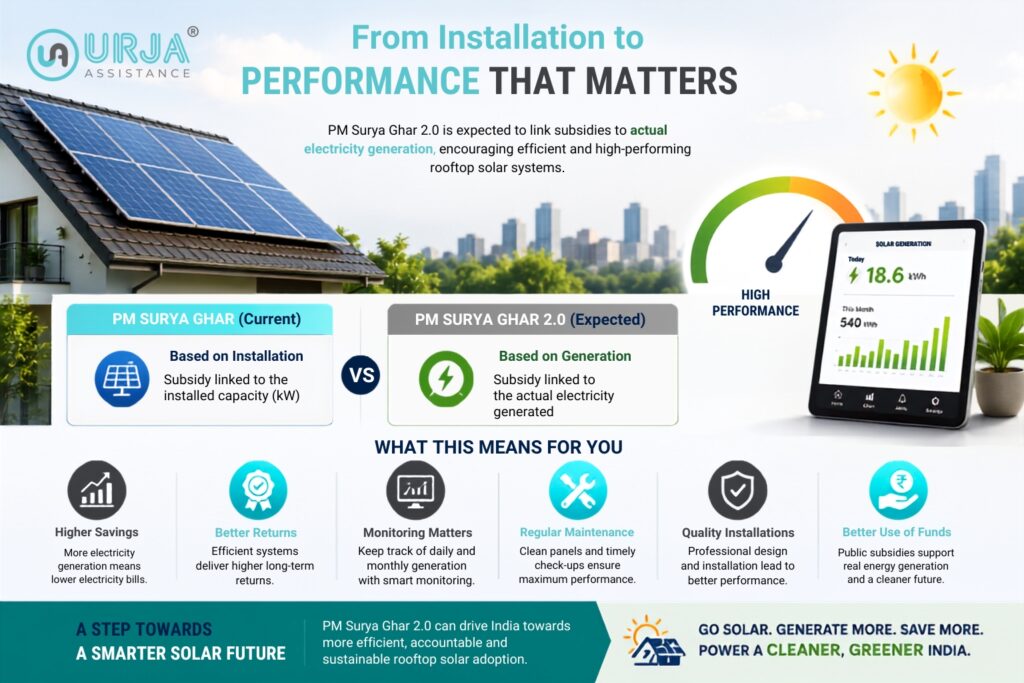
The current subsidy model is primarily linked to the installed capacity (kW) of a rooftop solar system. In simple terms, installing a larger system generally results in a higher subsidy, regardless of how efficiently the system performs over its lifetime.
PM Surya Ghar 2.0 aims to change this by shifting the focus from installation to performance, encouraging homeowners and installers to maximize clean electricity generation rather than just system size.
Performance-Based Subsidy: A Major Shift
One of the biggest proposed reforms is the introduction of a performance-based subsidy model.
Instead of rewarding installation alone, incentives may consider factors such as:
- Actual electricity generation
- System performance over time
- Battery storage integration
- Lifecycle maintenance
- Service quality and reliability
This approach encourages better-designed, high-quality rooftop solar systems that continue generating maximum electricity for years.
Smarter Technology for Better Performance
PM Surya Ghar 2.0 is also expected to introduce advanced digital technologies to improve transparency and system reliability.
Possible features include:
- AI-based quality inspections
- Digital Solar Passport for every installation
- Daily electricity generation monitoring
- Standardized data across inverter manufacturers
These innovations could simplify maintenance, improve warranty support, and help homeowners monitor their system’s health in real time.
Why Battery Storage Matters
Solar panels generate the most electricity during the day, while most households consume more power during the evening.
Battery Energy Storage Systems (BESS) can bridge this gap by:
- Storing excess daytime solar energy
- Providing backup during power outages
- Increasing self-consumption of solar energy
- Reducing dependence on the electricity grid
The proposed scheme may introduce dedicated incentives to encourage battery adoption, making rooftop solar even more effective.
Benefits for DISCOMs
Battery storage isn’t just beneficial for consumers—it can also strengthen the power distribution network.
Potential advantages include:
- Managing peak electricity demand
- Reducing reverse power flow
- Improving voltage stability
- Delaying costly grid expansion
A more stable grid benefits both electricity providers and consumers.
Making Solar Accessible to More People
Not every household has a suitable rooftop for solar installation. PM Surya Ghar 2.0 is expected to explore alternative models such as:
- Community solar projects
- Apartment rooftop solar
- Balcony solar systems
- Building-Integrated Photovoltaics (BIPV)
- Virtual or group net metering
These initiatives could expand access to clean energy beyond individual homeowners.
Smarter Financial Assistance
Future subsidy support may also become more targeted instead of following a one-size-fits-all approach.
Possible factors considered could include:
- Household income
- Consumer category
- Geographic location
- Battery adoption
- Electricity generation performance
This would help ensure government support reaches households that need it the most while encouraging efficient energy production.
Conclusion
PM Surya Ghar 2.0 represents a potential shift toward a performance-driven rooftop solar ecosystem. By combining generation-based incentives, battery storage, digital monitoring, and smarter financial support, the proposed reforms could improve the quality, efficiency, and long-term sustainability of residential solar in India.
While official guidelines are still awaited, one thing is clear—the future of rooftop solar will likely reward performance, reliability, and clean energy generation, not just installation.
At Urja Assistance, we help homeowners, businesses, and industries adopt high-performance rooftop solar solutions through expert system design, premium equipment, financing assistance, net metering support, and long-term maintenance services.
Whether you’re planning your first solar installation or preparing for the next generation of rooftop solar, our team is here to help you maximize your energy savings.
Go Solar. Generate More. Save More. Power a Greener Future with Urja Assistance.