
As India accelerates its transition toward renewable energy, electric mobility, and sustainable infrastructure, batteries are becoming one of the most critical components of the energy ecosystem. From electric vehicles to solar energy storage systems, batteries are enabling a cleaner and more efficient future.
However, the rapid growth of battery usage also raises an important challenge: how can we track and manage millions of batteries throughout their lifecycle?
To address this issue, the concept of a Battery Pack Aadhaar System has emerged. Inspired by India’s digital identification model, this system assigns a unique identity to every battery pack, allowing it to be tracked from manufacturing to recycling.
This framework aims to bring transparency, accountability, and sustainability to the battery ecosystem.
Understanding the Battery Pack Aadhaar System
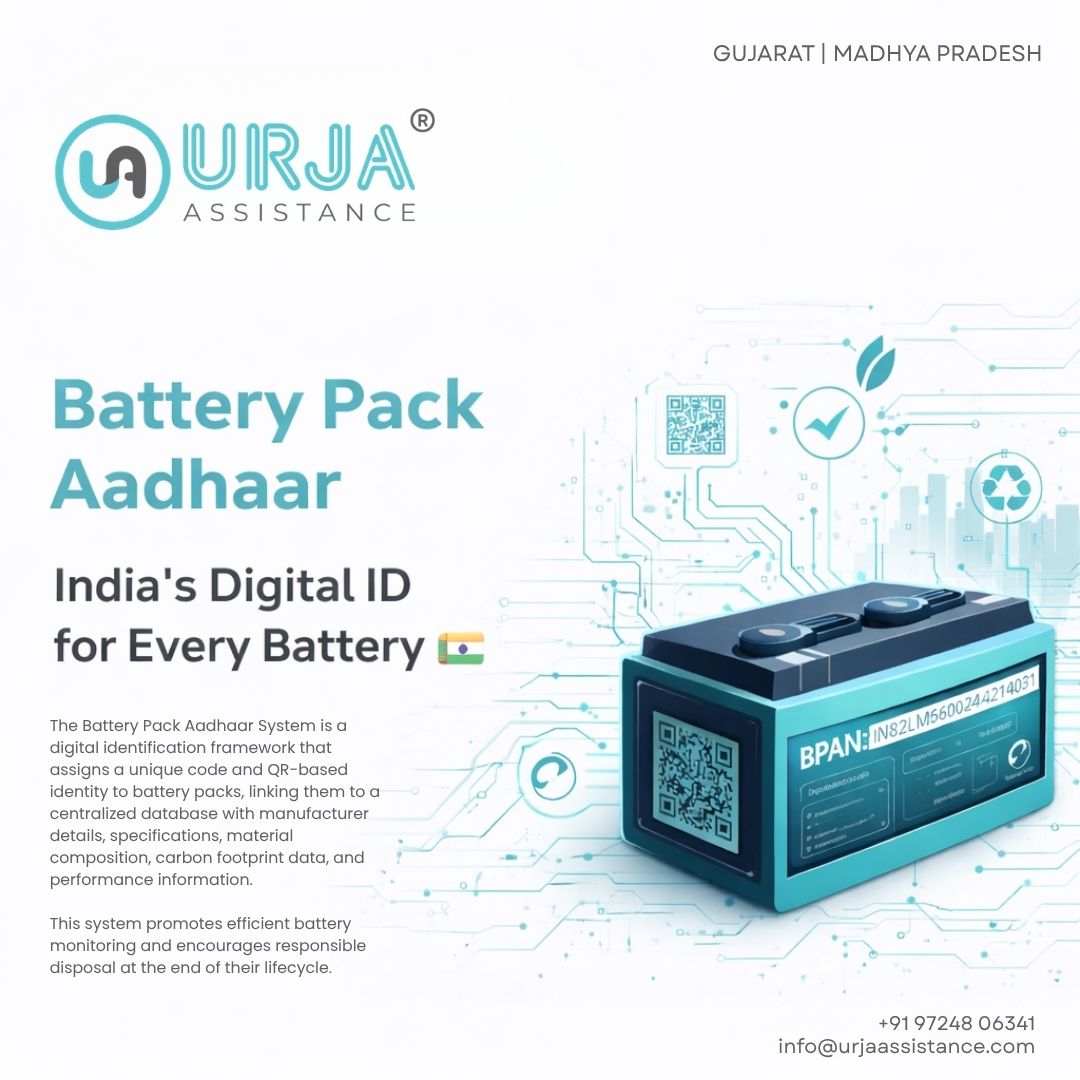
The Battery Pack Aadhaar System is a digital identification framework for batteries. Each battery pack receives a unique alphanumeric identification code and QR-based identity, which links to a centralized database containing detailed information about the battery.
This information can include:
- Manufacturer details
- Battery specifications
- Material composition
- Carbon footprint data
- Performance and usage information
By storing this information digitally, every battery can be monitored throughout its operational life. This ensures that batteries are used efficiently and disposed of responsibly when they reach the end of their lifecycle.
Why Battery Traceability Is Important
India’s renewable energy and electric vehicle sectors are expanding rapidly. With increasing adoption of batteries across industries, the need for traceability and lifecycle management has become essential.
Without a proper tracking system, several challenges arise:
- Environmental risks – Batteries contain valuable but potentially hazardous materials such as lithium, nickel, and cobalt. Improper disposal can harm the environment.
- Recycling inefficiencies – Without material composition data, recovering valuable metals from batteries becomes difficult.
- Safety concerns – Low-quality batteries or poor manufacturing standards can lead to safety risks such as overheating or fire hazards.
- Lack of transparency – It becomes difficult to trace the origin and performance history of a battery.
The Battery Pack Aadhaar System helps solve these challenges by creating a structured data ecosystem for batteries.
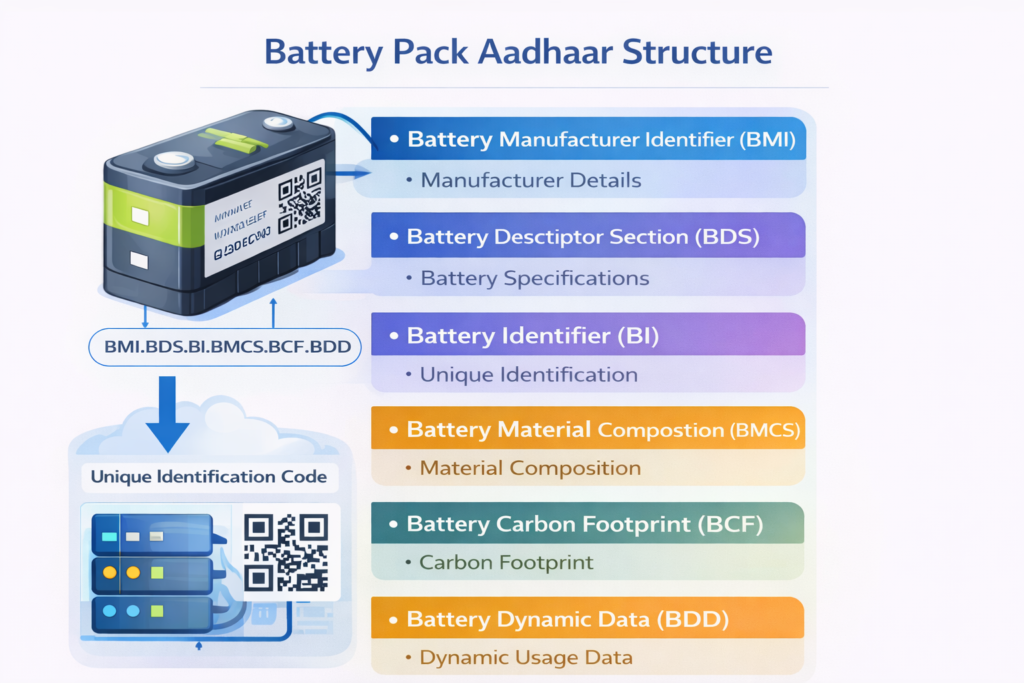
Key Components of the Battery Pack Aadhaar
The system is built using several important data layers that collectively form the battery’s digital identity.
Battery Manufacturer Identifier (BMI)
This component records information about the manufacturer, including company details and production location. It ensures accountability and helps trace the battery back to its source.
Battery Descriptor Section (BDS)
The descriptor section includes technical specifications of the battery such as capacity, voltage, chemistry, and application type. This information helps stakeholders understand the battery’s design and performance characteristics.
Battery Identifier (BI)
The Battery Identifier is the unique code assigned to each battery pack. This code acts as a digital fingerprint that distinguishes one battery from another.
Battery Material Composition Section (BMCS)
This section stores details about the materials used in the battery pack. Information about lithium, cobalt, nickel, and other materials helps recyclers recover valuable resources when the battery reaches the end of its life.
Battery Carbon Footprint (BCF)
With increasing focus on sustainability, tracking the environmental impact of battery manufacturing is becoming important. The carbon footprint section helps monitor emissions related to battery production.
Battery Dynamic Data (BDD)
Dynamic data records real-time or operational information such as usage patterns, charging cycles, performance trends, and safety alerts. This allows better monitoring and predictive maintenance of battery systems.
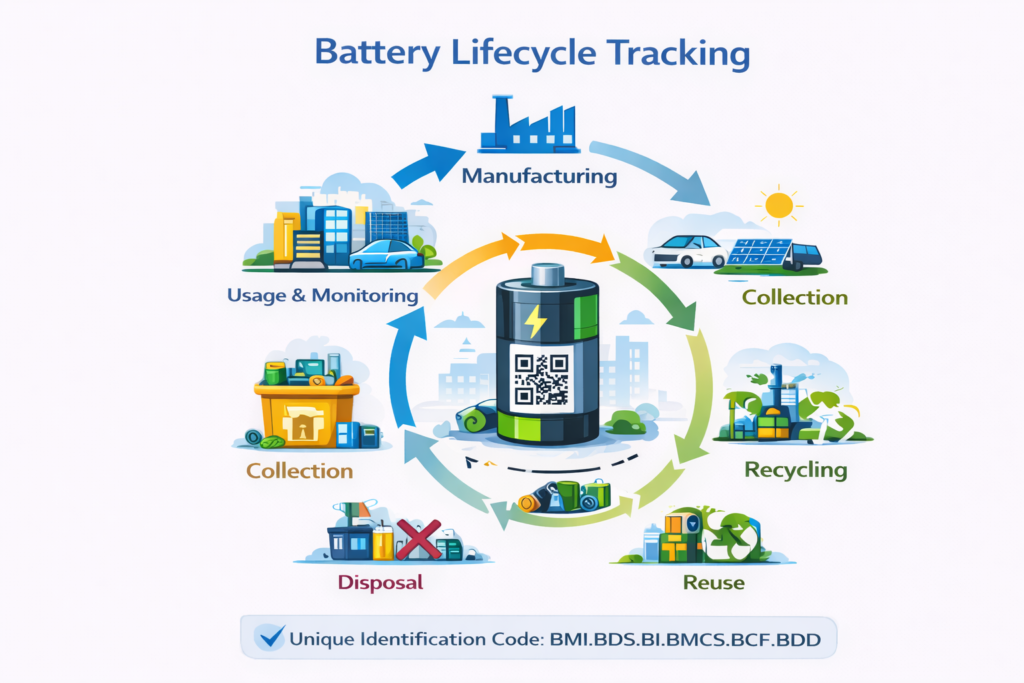
Battery Lifecycle Tracking
One of the most valuable features of the Battery Pack Aadhaar system is lifecycle tracking. Instead of losing visibility after a battery leaves the factory, the system follows it throughout its journey.
At each stage, the battery’s unique identity allows stakeholders to access relevant data. This improves efficiency across the battery value chain and ensures responsible resource management.
Benefits for the Clean Energy Ecosystem
The Battery Pack Aadhaar System can provide several benefits for India’s rapidly expanding clean energy sector.
- Improved Traceability
Every battery can be tracked from production to recycling, improving transparency. - Enhanced Safety
Monitoring performance and usage data helps identify risks early. - Better Recycling Efficiency
Material composition data enables efficient recovery of valuable metals. - Environmental Accountability
Carbon footprint monitoring supports sustainability goals. - Stronger Regulatory Compliance
The system helps align with emerging environmental and battery management regulations.
The Road Ahead
As India moves toward large-scale deployment of electric vehicles and renewable energy storage, the number of batteries in circulation will increase dramatically. Managing these batteries responsibly will be essential for maintaining environmental sustainability and resource efficiency.
At Urja Assistance, we see the Battery Pack Aadhaar System as a key step toward a transparent and sustainable ecosystem. By giving each battery a digital identity, it enables better tracking, compliance, and lifecycle management.
Looking ahead, integration with global battery passport systems can further strengthen traceability and position India as a leader in the clean energy value chain.