
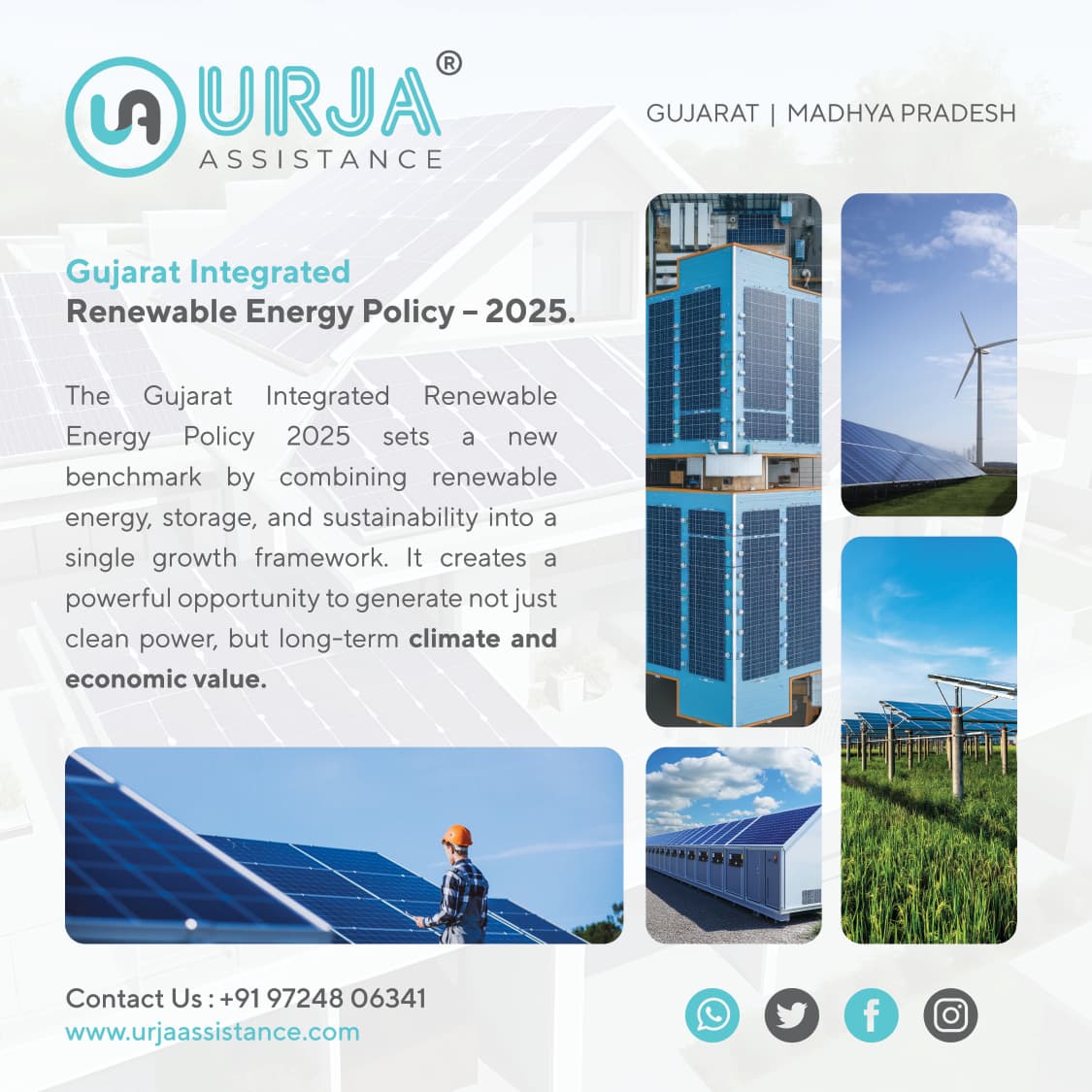
India’s clean energy transition has found a powerful catalyst in the Gujarat Integrated Renewable Energy Policy – 2025. With clear long-term targets, investor-friendly provisions, and a strong sustainability focus, the policy positions Gujarat as one of the most attractive destinations for renewable energy development and climate-focused investments in the country.
At URJA ASSISTANCE, we see this policy not merely as a regulatory framework, but as a business and sustainability enabler for developers, corporates, and global partners.
A Bold Vision for Green Growth
The policy outlines Gujarat’s ambition to achieve:
- 100+ GW of renewable energy capacity by 2030
- 300 GW by 2047, aligned with India’s long-term climate commitments
This long-term vision provides confidence to investors and developers while reinforcing Gujarat’s leadership in India’s renewable energy ecosystem.
Integrated Technology Approach
Unlike conventional policies focused on single technologies, Gujarat’s RE Policy 2025 adopts an integrated approach, covering:
- Solar power (ground-mounted, rooftop, floating, canal-based)
- Wind power and wind repowering
- Wind–solar hybrid projects
- Battery Energy Storage Systems (BESS)
- Emerging technologies such as Agri-PV, BIPV, and smart grid solutions
This enables the development of resilient, future-ready energy portfolios with optimized generation and grid stability.
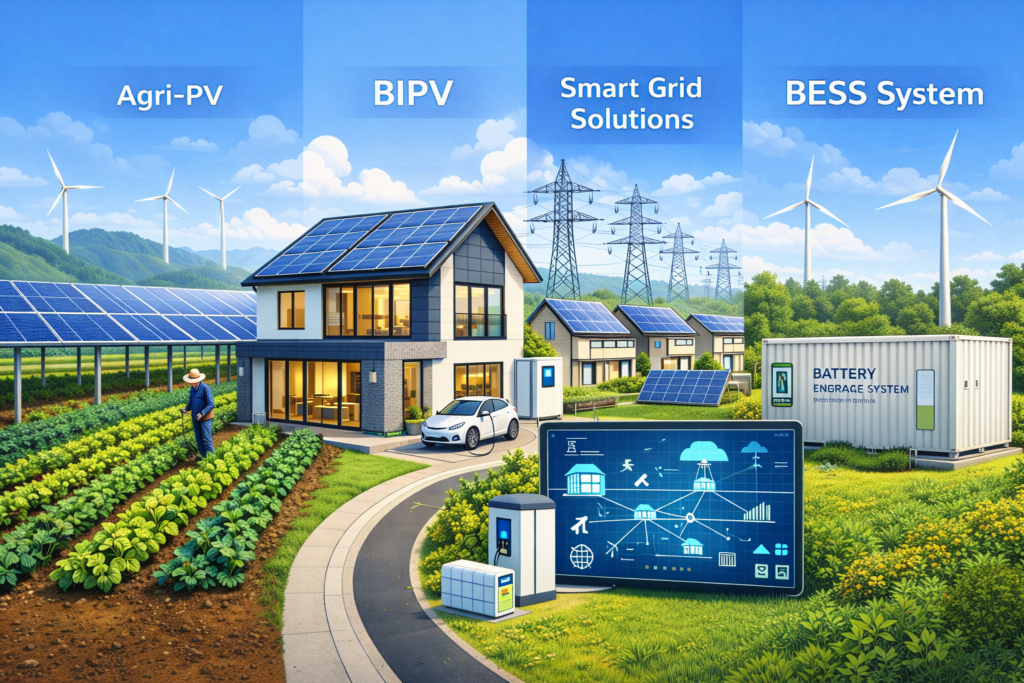
Hybrid Energy & Storage: The Future of Renewables
A major strength of the policy is its emphasis on hybrid projects and energy storage. By allowing BESS as both standalone and integrated systems, the policy supports:
- Peak demand management
- Improved grid reliability
- Better utilization of renewable assets
This positions Gujarat ahead of the curve as energy storage becomes central to renewable integration.
Opportunities for Corporates & Industries
The policy creates strong opportunities for industrial and commercial consumers through:
- Simplified open access
- Support for captive and group captive projects
- Virtual net metering options
These provisions allow businesses to reduce power costs, enhance energy security, and meet ESG, net-zero, and RE100 commitments efficiently.
Carbon Credits: Turning Green Power into Climate Assets
One of the most impactful provisions of the policy is its clarity on carbon credit ownership. Developers and captive users retain rights over carbon credits generated from renewable projects, enabling:
- Monetization through voluntary carbon markets
- Strong sustainability and ESG claims
- Improved project returns and long-term value creation
Renewable energy projects in Gujarat are no longer just power assets—they are tradable climate assets.
Ease of Doing Business & Investment Confidence
To ensure faster execution, the policy emphasizes:
- Single-window approvals
- Renewable Energy Parks (50 MW and above)
- Streamlined land and evacuation infrastructure
These measures significantly reduce project development risk and timelines, making Gujarat highly attractive for both domestic and international investors.
URJA ASSISTANCE: Your Partner in Gujarat’s Green Transition
At URJA ASSISTANCE, we help businesses and developers unlock the full potential of the Gujarat RE Policy 2025 by offering:
- Renewable project facilitation & advisory
- Captive and open-access structuring
- Carbon credit development & monetization
- Sustainability and ESG solutions
Conclusion
The Gujarat Integrated Renewable Energy Policy 2025 sets a new benchmark by combining renewable energy, storage, and sustainability into a single growth framework. It creates a powerful opportunity to generate not just clean power, but long-term climate and economic value.
Gujarat is leading India’s green future—and URJA ASSISTANCE is here to help you be part of it.